
Audi ADAS calibration may be needed after suspension repairs because control arms, tie rods, and alignment changes can affect steering angle and sensor positioning. A proper repair process checks both wheel alignment and electronic calibration before returning the vehicle to the road.
Audi Pre Sense and Lane Assist systems depend on accurate information from several sensors working together. When suspension repairs such as control arms, bushings, or steering tie rods are replaced, the vehicle’s alignment angles can change enough to affect how these safety systems interpret road conditions.
A vehicle may leave the alignment rack with acceptable wheel alignment angles but still require electronic calibration. The reason is simple: ADAS systems measure vehicle direction electronically, not just by looking at whether the tires appear straight.
For Audi drivers around Weaverville and mountain roads throughout Western North Carolina, this matters because steep grades, tight corners, and uneven road surfaces place more demand on steering and safety systems.
Suspension Repairs Can Affect Audi Safety Systems
Audi models such as the Q5, A6, and Q7 use a combination of radar sensors, cameras, and steering information to understand the vehicle’s position. The front radar units and cameras use calibrated reference positions to help calculate vehicle movement, lane position, and object detection.
Replacing front-end components can slightly change the relationship between the vehicle’s physical direction and what the electronic systems expect. Components that may influence ADAS operation include:
- Front control arms and bushings
- Steering tie rods
- Suspension leveling components
- Lowering kits
- Steering and alignment adjustments
A common situation occurs when a vehicle receives suspension repairs but skips the ADAS calibration process afterward. The steering may feel normal, yet the vehicle may display warnings such as Audi Pre Sense unavailable or Lane Assist unavailable.
Real World Audi Calibration Example
A 2020 Audi Q7 arrived after front suspension work was completed. The vehicle had new control arms installed and passed a basic alignment inspection, but the driver reported intermittent Pre Sense warnings during turns.
The scan showed the steering angle value was not matching the vehicle center position after the control arm replacement. The calibration routine would not complete until the alignment measurements were corrected. After confirming alignment measurements, resetting the steering angle sensor, and completing the ADAS calibration process, the warning messages cleared.
The important lesson from this type of repair is that mechanical alignment and electronic calibration are connected. Correcting only one side of the system can leave the vehicle with inaccurate safety system information.
Mountain Roads Put More Demand on Vehicle Sensors
Mountain roads outside Weaverville create frequent steering corrections and suspension movement, which can expose calibration issues that may not appear during a short flat-road test drive. Roads with elevation changes, sharper corners, and uneven surfaces require constant adjustments from steering and safety systems.
On roads near Ox Creek Road and surrounding mountain routes, vehicles experience:
- Frequent steering corrections
- Changes in suspension compression and rebound
- Reduced visibility around sharp curves
- Greater reliance on lane guidance and collision warning systems
When the vehicle’s electronic systems receive inaccurate steering or alignment information, drivers may notice warning lights, unavailable safety features, or unexpected system behavior.
Proper Calibration Requires More Than Wheel Alignment
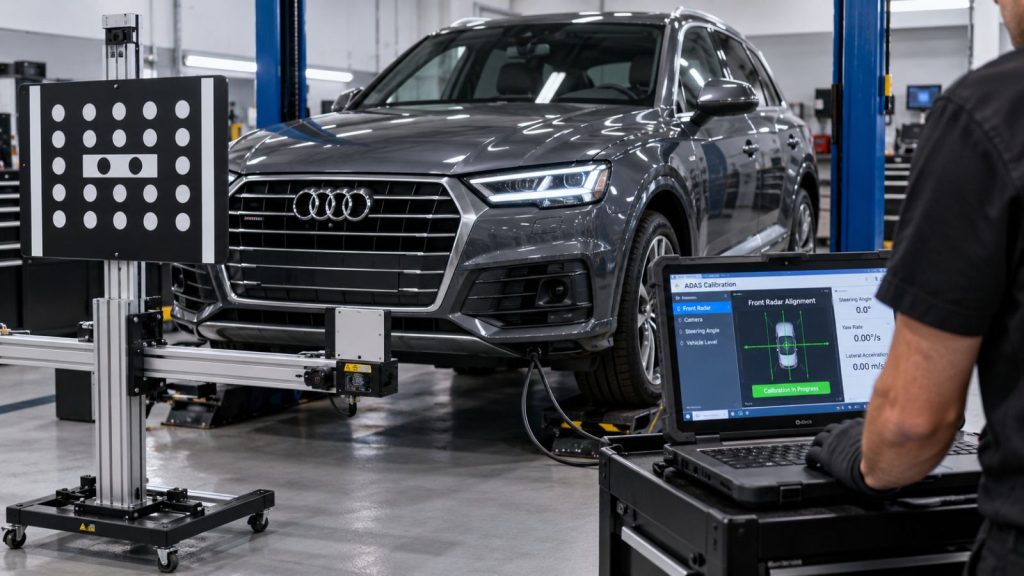
A four-wheel alignment is an important first step after suspension repairs, but it does not replace ADAS calibration. Alignment corrects the physical position of the wheels while calibration restores communication between the vehicle sensors and control modules.
The calibration process typically includes:
- Confirming tire pressures and suspension conditions before adjustments.
- Measuring and correcting wheel alignment angles according to Audi specifications.
- Resetting the steering angle sensor with factory diagnostic equipment.
- Positioning calibration targets correctly for radar and camera systems.
- Completing the manufacturer calibration procedure and verifying system operation.
Audi factory procedures use equipment such as ODIS diagnostic software and approved ADAS calibration equipment to complete these steps accurately.
Diagnostic Checks Prevent Unnecessary Parts Replacement
When Audi Pre Sense warnings appear after suspension work, replacing expensive radar units or cameras should not be the first step. A complete diagnostic process should verify whether the issue comes from calibration, alignment, wiring, or an actual sensor problem.
A proper inspection includes:
- Reviewing stored fault codes
- Checking live steering angle data
- Confirming alignment measurements
- Testing calibration procedures
- Verifying system operation after repairs
This approach helps identify the actual cause instead of replacing components without evidence.
Frequently Asked Questions
Does Audi require calibration after control arm replacement?
Yes. Audi ADAS calibration may be required after control arm replacement if suspension geometry changes affect steering angle, wheel alignment, or sensor positioning.
Can a wheel alignment fix Audi Pre Sense warnings?
No. A wheel alignment corrects mechanical angles, but it does not reset radar, camera, or steering angle calibration values stored in the vehicle modules.
Why does Audi Lane Assist stop working after suspension repairs?
Audi Lane Assist may become unavailable when the system detects that steering angle information, camera data, or radar positioning does not match expected vehicle movement.
How long does Audi ADAS calibration take?
Most calibration procedures require additional time beyond a standard alignment because the vehicle must be positioned correctly, scanned, adjusted, and tested.
Should radar sensors be replaced when Audi Pre Sense stops working?
No. Radar replacement should only be considered after diagnostic testing confirms the sensor itself has a fault.
Audi ADAS Service in Weaverville North Carolina
Suspension repairs can restore driving comfort, but accurate calibration helps ensure Audi safety systems continue working as designed. Drivers near Weaverville who receive Pre Sense warnings after suspension work should have the alignment and electronic calibration checked together.
Mountain Euro LLC provides Audi suspension inspection, alignment verification, and ADAS calibration services at 186 Herron Cove Rd, Weaverville, NC 28787, United States. The shop verifies mechanical alignment and electronic calibration together instead of replacing ADAS components without testing.
If your Audi shows Pre Sense or Lane Assist warnings after control arm, tie rod, or suspension repairs, Mountain Euro LLC can verify alignment measurements and ADAS calibration status at 186 Herron Cove Rd, Weaverville, NC 28787, United States. Proper calibration helps restore accurate communication between the vehicle sensors and control modules after suspension repairs.
